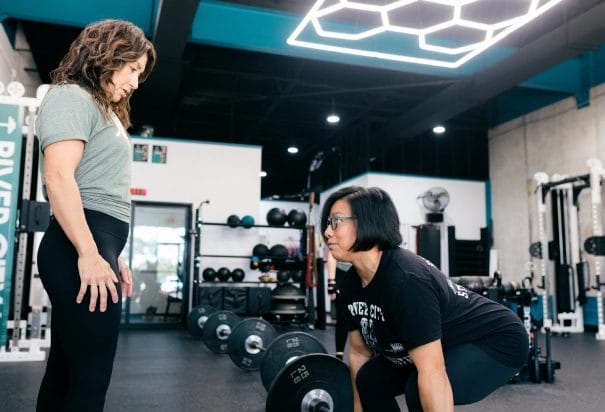
Strength training for fall prevention is one of the most practical reasons to start strength training but it’s rarely the one that gets people through the door. Most people come in wanting to lose weight or feel better. And that’s badass. But at some point, staying upright starts to matter just as much.
I was reminded of this the other day. Not from research or a client story, good ole’ fashioned first hand account of man meets ground, with gravel in my knee.
I tripped over my own foot on a regular walk.
Popped back up, brushed off the damage, did a quick mental inventory: wrist okay, shoulder okay, no blood.
Falling sucks. Falling as an adult sucks worse. And the older you get, the higher the stakes.
The Fall Risk Nobody Sees Coming
Most people associate serious fall injuries with older adults: 70s, 80s, nursing home stuff. And yes, falls are genuinely dangerous at that age.
But here’s what the data actually shows: people in their 40s and 50s account for the majority of fall-related injuries. They’re less severe, but they’re happening constantly.
Why?
Because that’s the decade when the slow decline in strength and balance starts outpacing our awareness of it.
We compensate without realizing it, shuffling instead of stepping, grabbing the railing out of habit, leaning into a wall when we bend over to pick something up. Small adjustments that add up to a body that’s quietly losing its ability to catch itself.
You Cannot Make Yourself Fall-Proof (But You Can Get Ready for Impact)
Let’s be honest: you’re going to fall again. So am I. The ground is always going to be there waiting.
What we can control is how ready our bodies are when it happens. That means building the physical qualities that keep a stumble from becoming a serious injury.
Here’s what actually matters:
- Balance and coordination: The faster your body can detect and correct a shift in position, the less likely a trip becomes a fall. This improves with training, specifically single-leg work, loaded carries, and movements that challenge your stability.
- Muscle mass: More muscle means more force absorption when impact happens. It also means stronger legs to catch yourself mid-stumble before you go all the way down.
- Bone density: This one is a biggie. Bone density peaks in your 30s and declines steadily from there. Resistance training, specifically loaded, weight-bearing exercise, is one of the few things proven to slow that decline.
- Intermuscular coordination: This is your body’s ability to get multiple muscle groups working together at the right time. A trained body simply reacts faster.
Why Strength Training for Fall Prevention Works
All four of those qualities, balance, muscle mass, bone density, intermuscular coordination, respond to the same stimulus: consistent, progressive strength training.
Not yoga alone. Not walking. Not the resistance band routine from YouTube. They simply don’t create the mechanical load your bones and muscles need to adapt and stay resilient.
It’s not complicated. Pick things up. Put them down. Do it consistently. Do it progressively. Repeat for the rest of your life.
If you’re in your 40s or 50s in the Castle Hills or San Antonio area and you’ve been quietly noticing that your balance isn’t what it was, or your legs feel less reliable than they used to, this is the time to do something about it. Not when you’re 70. Now, while the adaptations come faster and the starting point is higher.
Frequently Asked Questions
Can strength training really help prevent falls?
Yes and it’s one of the most evidence-backed interventions available. Strength training builds the muscle mass, bone density, and neuromuscular coordination that make your body more capable of catching itself when balance is disrupted. It doesn’t make you fall-proof, but it makes falls less likely and less damaging when they happen.
What kind of exercises help with fall prevention for adults over 40?
Compound movements like squats, deadlifts, and lunges build the leg strength and coordination most relevant to fall prevention. Single-leg exercises and loaded carries develop balance under real-world conditions. A well-programmed strength training routine covers all of it without requiring you to become a gym rat.
How does strength training improve bone density?
When you place mechanical load on your bones through weight-bearing exercise, your body responds by reinforcing them. This process, called bone remodeling, slows the natural density decline that starts in your 30s. Consistent resistance training is one of the only lifestyle factors proven to meaningfully influence bone density after that decline begins.
Is it too late to start strength training for fall prevention in my 50s or 60s?
No. The benefits of strength training show up at every age. Starting in your 50s or 60s still produces meaningful improvements in muscle mass, balance, and bone health. The sooner you start, the more you have to work with but there is no age at which strength training stops being worth it.
The Bottom Line
Aging comes with tradeoffs. You can’t stop all of them. But losing the physical ability to catch yourself when life inevitably puts a root in your path, that one’s negotiable.
Get stronger. Stay consistent. The ground will always be there. Make sure your body is ready for it.
Jesse